Getting Married in Tenerife: Legal Rules, Venues and Planning Tips
Aktualisiert am 10. November 2026 · DoTenerife
Dieser Ratgeber ist noch nicht in Ihrer Sprache verfügbar und wird deshalb auf Englisch angezeigt.
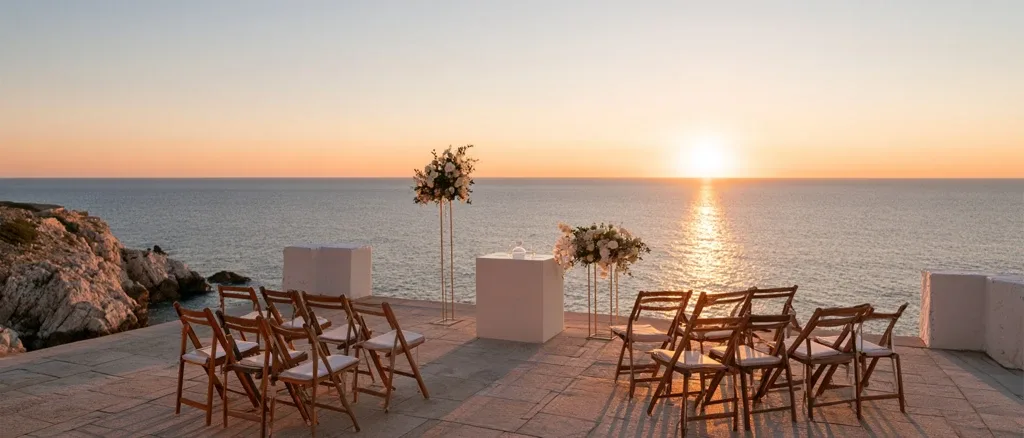
You can have a beautiful wedding in Tenerife, but for most British couples it won’t be the legal part. A civil wedding in Spain generally requires at least one partner to be Spanish or resident in Spain for two years. A Catholic church wedding is legally valid with no residency rule, but needs at least one Catholic partner, the bishop’s permission and plenty of paperwork, so start around six months ahead. Other religious or celebrant-led ceremonies are not legally binding in Spain. That’s why most couples marry legally at home first, then hold a symbolic ceremony or blessing in Tenerife: on a beach, in a hotel garden, on a clifftop terrace, at a vineyard or in a historic town. Beach ceremonies normally need a permit from the town hall. Rules change, so check with the Spanish consulate and GOV.UK before you commit.
Your three options
| Option | Legally binding in Spain? | Who it suits | Key points |
|---|---|---|---|
| Spanish civil wedding | Yes | Couples where one partner is Spanish or has lived in Spain for two years | Arranged through the local civil registry; lots of paperwork |
| Catholic church wedding | Yes | Couples where at least one partner is Catholic | Needs diocese permission, pre-marriage course and documents; start around six months ahead |
| Symbolic ceremony or blessing | No | Most UK couples | Legal marriage at home first; total freedom over venue, wording and timing |
The legal-at-home route
For most couples, the simplest approach is a small register office ceremony at home, then the “real” celebration in Tenerife. In England and Wales you must normally give notice at least 28 full days before a civil marriage (rules differ in Scotland and Northern Ireland), so plan that in. The Tenerife ceremony can then be as personal as you like, led by a celebrant, with your own vows, music and readings, and without legal constraints on where or when.
Catholic weddings
If one of you is Catholic, a church wedding in Tenerife can be legally recognised. Expect to need baptism and confirmation certificates, a pre-marriage course, letters of freedom to marry and permission from both your home diocese and the Diocese of Tenerife. Your home parish priest is usually the starting point. Tenerife has beautiful churches in towns such as La Laguna, La Orotava and Garachico, though not every church takes weddings for visitors.
Paperwork for legal routes
Any UK documents used for a legal wedding in Spain usually need an apostille (an official certificate from the UK government’s legalisation office) and a sworn translation into Spanish by an officially recognised translator. Requirements vary between registries and parishes, so always get a written list from them.
Choosing a venue
Tenerife’s variety is its biggest strength as a wedding destination:
- Hotel gardens and terraces: the easiest option, with catering, accommodation and a wet-weather plan in one place. Many larger hotels in Costa Adeje have dedicated wedding coordinators. See where to stay in Tenerife and adults-only hotels.
- Beaches: barefoot ceremonies on golden sand or dramatic black volcanic beaches. Public beaches need permission from the town hall and sometimes the coastal authorities. In Santa Cruz, for example, a ceremony on Las Teresitas involves a small permit fee plus a deposit. See Playa de las Teresitas.
- Clifftop terraces and sea views: the west coast near Los Gigantes offers huge cliffs and sunsets over La Gomera. See sunset spots.
- Vineyards and rural estates: the north’s wine country around Tacoronte and La Orotava offers greener, more rustic settings. See wine tasting in Tenerife.
- Historic towns: cobbled streets, colonial mansions and plazas in La Laguna, La Orotava and Garachico make superb backdrops for photos.
- Teide: few couples marry in the national park itself, but a sunset photo shoot in the caldera is a popular extra. See our Teide National Park drive guide.
Best time of year
| Season | What to expect |
|---|---|
| Spring (March to May) | Warm, bright and popular; flowers in the hills |
| Summer (June to September) | Hot in the south, busy and pricier; trade winds can be strong in places |
| Autumn (October to November) | Warm sea and settled weather in most years; a favourite for weddings |
| Winter (December to February) | Mild and sunny on the southern coast, but shorter days and cooler evenings; the north is more changeable |
The south and west are sunnier and drier than the north. Occasional calima (dust haze from the Sahara) and wind can affect outdoor plans, so always have a backup. Check our weather by month guide, the weather in October and best time to visit.
Planning tips
- Decide on the legal side first. It shapes everything else.
- Consider a local planner. They know which beaches need which permits, which suppliers are reliable and how to handle Spanish paperwork.
- Book a late-afternoon ceremony. The light is softer and the heat less intense. Check sunset times for your date.
- Plan for wind. Veils, arches and paper decorations can blow away on exposed beaches and terraces.
- Think about guests. Flights from the UK take around four to four and a half hours. Choose a resort with a range of accommodation, and share our first time in Tenerife guide and getting around guide.
- Transport. Coaches or minibuses are easier than guests hiring cars, particularly if the venue is in the hills.
- Get quotes in writing. Check what’s included in packages: ceremony, permits, music, flowers, photography and taxes.
- Check your insurance. Wedding insurance and travel insurance cover different things.
Hen and stag dos
Many couples combine the wedding with a celebration for friends, or hold their hen or stag do on the island beforehand. See our guides to the hen do in Tenerife and stag do in Tenerife, plus boat parties and dinner shows for group nights out. For your first evening as a married couple, try our date night ideas.
Information checked on 10 November 2026. Marriage laws, document requirements and permit fees change, so confirm the current rules with the Spanish consulate, GOV.UK, the civil registry or parish, and the relevant town hall before you book.
Häufig gestellte Fragen
Can British couples legally get married in Tenerife?
It is difficult. A civil wedding in Spain generally requires at least one partner to be a Spanish national or to have been resident in Spain for two years. Most British couples therefore marry legally at a register office at home and hold a symbolic ceremony or blessing in Tenerife.
Can we have a Catholic church wedding in Tenerife?
Yes, a Catholic wedding is legally valid in Spain without a residency requirement, but at least one partner needs to be Catholic, you need permission from the diocese and there is a lot of paperwork. Start at least six months ahead, working through your home parish.
Is a beach wedding in Tenerife legal?
A beach ceremony is usually a symbolic ceremony or blessing rather than a legal marriage. You normally need permission from the local town hall, and sometimes the coastal authorities, to set up on a public beach. Fees and deposits vary by municipality.
What is the best month to get married in Tenerife?
Spring and autumn are popular, with warm but not scorching weather in the south. Winter is mild and sunny on the coast, which makes it a good escape from British weather, while July and August are hot and busy. Late afternoon ceremonies avoid the strongest sun.
Do we need a wedding planner in Tenerife?
It is not compulsory, but a local planner helps with permits, suppliers, Spanish paperwork and timings, especially for beach or outdoor ceremonies. Many hotels also have in-house wedding coordinators.
What documents do we need to marry legally in Spain?
For legal routes you typically need birth certificates, proof of single status and passports, with UK documents carrying an apostille and a sworn translation into Spanish. Requirements vary by registry and parish, so confirm the exact list with them and check GOV.UK guidance.
Ähnliche Ratgeber