Things to Do in Adeje Town (Villa de Adeje)
Aktualisiert am 10. November 2026 · DoTenerife
Dieser Ratgeber ist noch nicht in Ihrer Sprache verfügbar und wird deshalb auf Englisch angezeigt.
Adeje town (Villa de Adeje) is the historic centre of the municipality that gives Costa Adeje its name. It sits uphill from the resort, about 10 minutes by car or bus. The main things to do are a stroll and lunch on Calle Grande, famous for its garlic chicken, visits to the 16th-century Iglesia de Santa Úrsula and the Casa Fuerte, and the Barranco del Infierno gorge walk, which starts at the top of town and must be booked in advance. It’s quieter and more local than the coast, and easy to combine with a beach afternoon or Siam Park.
Adeje town at a glance
| What | Details |
|---|---|
| Where | Hillside above Costa Adeje, south-west Tenerife |
| Getting there | About 10 min by car or taxi from Costa Adeje; TITSA buses from the resort |
| Time needed | 2 to 3 hours; half a day or more with the Barranco del Infierno walk |
| Highlights | Calle Grande, Iglesia de Santa Úrsula, Casa Fuerte, views, Barranco del Infierno |
| Best for | Lunch, a short dose of history, a break from the beach |
| Big event | Good Friday Passion play on Calle Grande |
Calle Grande and the garlic chicken
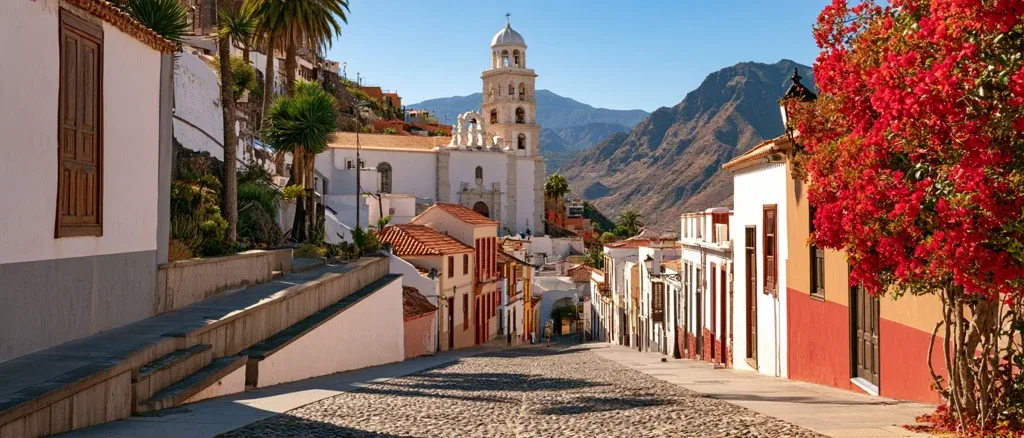
Calle Grande is Adeje’s main street. It climbs steeply from the lower part of town towards the church and the mouth of the Barranco del Infierno. It’s lined with cafés, bars, small shops and restaurants.
The street is best known for pollo al ajillo (garlic chicken). Several grill restaurants here have served it for years, and for many residents of the south, a trip “up to Adeje for chicken” is a weekend tradition. Expect generous portions, served simply with chips or papas arrugadas and salad. We don’t single out one place: look for the busiest grill and follow the locals.
Tips
- Lunch is the main meal in Spain and the street is liveliest from about 1.30pm.
- Weekend lunchtimes get busy with local families, so arrive early or book.
- The street is steep. Wear comfortable shoes, and allow extra time if you have a pushchair or limited mobility.
Iglesia de Santa Úrsula
At the top end of Calle Grande stands the Iglesia de Santa Úrsula, the town’s parish church, dating from the 16th century. Santa Úrsula is Adeje’s patron saint. The church is a good example of traditional Canarian church architecture, with a simple white exterior and a richer interior.
If the doors are open, step inside quietly, especially if a service is taking place. The square in front is a pleasant place to pause before or after the climb.
Casa Fuerte
The Casa Fuerte is a 16th-century fortified house built by the Ponte family, who were granted land in Adeje after the Spanish conquest. It was at the heart of a large estate whose wealth came from sugar cane, one of the islands’ most valuable early exports.
As its name (“strong house”) suggests, it was built to defend the estate and the coast against pirate raids. Over the centuries it was damaged and altered, and today you see it mainly from the outside. Access to the interior has been limited in the past, so treat it as a sight to admire on your walk rather than a museum visit.
Barranco del Infierno
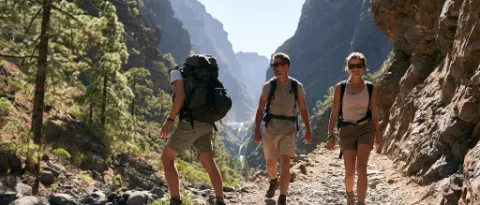
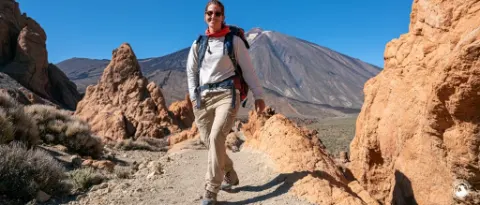
The Barranco del Infierno (“Hell’s Gorge”) is one of Tenerife’s best-known walks, and the trail starts at the top of Adeje town. The route follows a deep ravine into a protected natural area, ending at a waterfall when there has been enough rain.
What you need to know:
- Booking is required. The number of visitors allowed each day is limited, and you must book a time slot in advance through the official booking system.
- Check it is open. The trail has closed at times because of rockfall risk or weather.
- Bring water, sun protection and proper shoes. There is little shade in places.
For full details, see our Barranco del Infierno guide. For other routes, see best walks and hikes in Tenerife.
Views over the south coast
Because the town sits on the slope of the hills, there are good views down over Costa Adeje to the sea and, on a clear day, across to La Gomera. The upper part of Calle Grande and the area around the start of the Barranco give the best outlooks. Late afternoon light is particularly good.
Good Friday Passion play
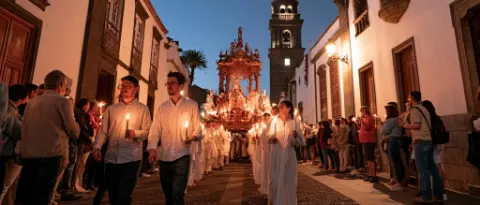
Adeje is famous across the island for its Good Friday Passion play. Hundreds of local volunteers act out the Passion of Christ along Calle Grande, in costume, in front of large crowds. It is free to watch.
Arrive early to find a spot, expect road closures and busy buses, and bring water and a hat. See our Easter in Tenerife 2027 guide for dates and other Holy Week events.
Markets and local life
Adeje town feels like a working Canarian town rather than a resort. You’ll see local shops, the town hall and residents going about their day. Weekday mornings are the quietest time to wander.
The municipality has local market days, but schedules change. Check our Tenerife markets guide or markets open today before planning a visit around one.
How to get to Adeje town
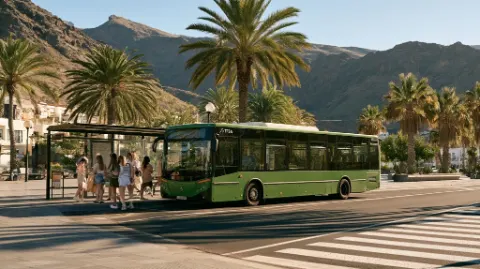
- By bus: TITSA buses link Costa Adeje, Playa de las Américas and Los Cristianos with Adeje, which has its own bus station. Journey times are short, but check the timetable on the TITSA website or app. See our Tenerife buses guide.
- By taxi: about 10 minutes from most of Costa Adeje. See Tenerife taxis.
- By car: follow signs for Adeje from the TF-1 or the resort. Parking near the top of Calle Grande is limited, especially at weekends and when the Barranco del Infierno is busy, so you may need to park lower down and walk up.
Combine your visit
- Siam Park: the water park is down in Costa Adeje, a short drive from the old town. A morning walk in Adeje and an afternoon at Siam Park works well.
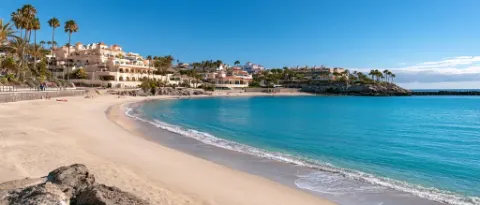
- Beaches: finish the day on Playa del Duque or with a sunset in La Caleta.
- More ideas: see things to do in Costa Adeje and the Adeje area page.
Information checked on 10 November 2026. Opening times, bus routes and Barranco del Infierno booking rules can change, so check official sources before you go.
Häufig gestellte Fragen
How far is Adeje town from Costa Adeje?
The old town sits on the hillside above the resort, about 10 minutes away by car or a short TITSA bus ride. Taxis are easy to find in Costa Adeje for the trip up.
What is Adeje town famous for?
Calle Grande, the steep main street, is known for restaurants serving garlic chicken (pollo al ajillo). The town also has the 16th-century Iglesia de Santa Úrsula, the Casa Fuerte fortified house and the start of the Barranco del Infierno gorge walk.
Do you need to book Barranco del Infierno?
Yes. Visitor numbers are limited each day and you must book in advance through the official booking system. The trail can also close after rockfalls or bad weather, so check it is open before you go.
Is Adeje town worth visiting?
Yes, if you want to see a more Canarian side of the south. It's quieter and less touristy than the coast, with a historic church, views down to the sea and a good lunch spot. Half a day is enough unless you are walking the Barranco del Infierno.
What happens in Adeje at Easter?
On Good Friday, Adeje stages a large open-air Passion play along Calle Grande, with hundreds of local performers. It's free and draws big crowds, so arrive early.
Ähnliche Ratgeber