Tenerife for digital nomads and remote workers
Mis à jour le 10 novembre 2026 · DoTenerife
Ce guide n'est pas encore disponible en français ; il s'affiche donc en anglais.
Tenerife is one of Europe’s most popular bases for remote workers: it has a spring-like climate all year, is on the same time zone as the UK, has fibre broadband in most towns and a growing network of coworking spaces. UK and other visa-exempt visitors can stay up to 90 days in any 180 without a visa. To stay longer as a remote worker, the usual route is Spain’s digital nomad visa, which in 2026 requires the main applicant to earn at least around €2,849 a month, mostly from outside Spain.
Below we cover the visa, tax, connectivity and where to base yourself. Visa rules change, so always check with the Spanish consulate, GOV.UK or a qualified adviser before you apply.
Spain’s digital nomad visa in 2026
Spain introduced its international remote work visa under the Startups Law. The headline requirements are:
| Requirement | 2026 detail |
|---|---|
| Minimum income (main applicant) | Around €2,849 a month (200% of the Spanish minimum wage, raised for 2026) |
| First dependant | Around €916 a month extra |
| Each additional dependant | Around €305 a month extra |
| Source of income | Mainly from outside Spain |
| Employees | Written authorisation to work remotely, from an employer operating for at least one year |
| Freelancers | No more than 20% of income from Spanish clients |
| Health insurance | Private cover with no co-payments |
You will also typically need to show relevant qualifications or professional experience, a clean criminal record and evidence of your employment or client contracts.
Applying from abroad or from inside Spain
- From abroad: apply at the Spanish consulate in your country of residence. If approved you get a one-year visa, then apply for residence in Spain.
- From inside Spain: if you are visa-exempt (UK citizens are) and in Spain legally, you can apply directly for a residence permit of up to three years.
Both are renewable if you still meet the conditions. Once in Tenerife you will also need an NIE and TIE and to register on the padrón; our moving to Tenerife guide explains each.
Tax for remote workers
Living in Spain for more than 183 days a year usually makes you Spanish tax resident. Digital nomad visa holders may be able to apply for the Beckham regime (special regime for impatriates), which can allow a flat 24% rate on Spanish-source employment income up to a limit, rather than progressive rates. Eligibility, deadlines and how it treats freelance and foreign income are technical, so get advice from a cross-border tax adviser before you arrive. Social security contributions are a separate question too.
Why Tenerife works for remote work
- Climate: mild year-round, with the south drier and sunnier and the north greener and cooler. See Tenerife weather by month.
- Time zone: the Canaries share UK time, including summer time changes, which makes UK and European calls easy. See time in Tenerife.
- Flights: frequent, often inexpensive flights to the UK and Europe from two airports. See Tenerife airports.
- Cost of living: eating out and transport are often cheaper than in the UK. See Tenerife prices.
Internet and mobile data
Fibre broadband is widely available in towns and resorts, with fast symmetric speeds common in newer apartments. Rural and hillside homes can be patchier, so always ask a landlord for a speed test before signing.
For mobile data, check whether your UK network charges for roaming in Spain, and consider a local SIM or eSIM for long stays. Our mobile roaming guide covers the options. A mobile hotspot is a sensible backup for important calls.
Coworking and community
There are coworking spaces in Santa Cruz, La Laguna, Puerto de la Cruz, Costa Adeje and El Médano, ranging from small surf-town hubs to larger business centres. Most offer day passes, monthly desks and meeting rooms, and some run coliving. Prices and opening hours change, so compare current options before committing.
The remote-working community is active, with regular meetups, social events and online groups for newcomers. Cafés with good Wi-Fi are easy to find in the main towns, though it is polite to keep laptop sessions reasonable at busy times.
Where to base yourself
| Base | Best for | Things to know |
|---|---|---|
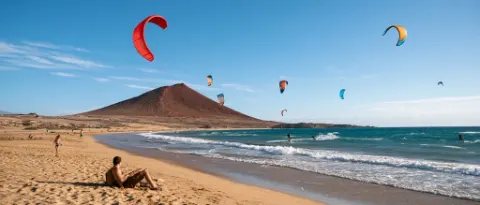
| El Médano | Surfers, kitesurfers, relaxed beach life | Windy much of the year; young international crowd; near Tenerife South airport |
| La Laguna | City life, culture, students | Cooler and cloudier; UNESCO old town; near Tenerife North airport |
| Puerto de la Cruz | Value, Canarian feel, sea views | Greener north coast climate; established community |
| Costa Adeje | Sunshine, amenities, nightlife | Higher rents; more touristy |
| Santa Cruz | Capital-city services and transport | Practical base with good links |
El Médano is the classic nomad choice; see our El Médano beach guide and windsurfing and kitesurfing in El Médano. For a more urban feel, read our La Laguna guide.
Finding accommodation
Long-term rentals are tight, especially in the south and in El Médano. Many remote workers start with a month or two in a short-stay apartment or coliving space, then look for a longer let once they know the area. Be cautious with deposits paid before viewing, and get a written contract.
Without a visa: the 90/180 rule
If you are only coming for a winter, you can stay up to 90 days in any 180 across the Schengen area. Our 90/180 rule guide explains how to count days. Working remotely for a foreign employer on a short visit is a legal grey area, so for regular or longer stays it is safer to get the right visa.
Life outside work
Tenerife makes it easy to switch off: surf before work, hike at weekends (see best walks and hikes) and check what’s on tonight for live music and social nights.
Information checked on 10 November 2026. This is general information, not legal, immigration or tax advice. Visa thresholds and rules change, so confirm with the Spanish consulate, GOV.UK or a qualified adviser.
Questions fréquentes
How much do I need to earn for Spain's digital nomad visa in 2026?
The main applicant needs at least around €2,849 a month, which is 200% of Spain's minimum wage after the 2026 rise. Add roughly €916 a month for the first dependant and about €305 for each additional one. Check the current figure with the consulate before applying.
Can I work for Spanish clients on a digital nomad visa?
Only to a limited extent. Your income must come mainly from outside Spain. Freelancers can earn no more than 20% of their income from Spanish clients, and employees need authorisation to work remotely from an employer that has been operating for at least a year.
Is Tenerife good for remote working?
Yes. It has a spring-like climate all year, is on the same time zone as the UK, has fibre broadband in most towns and coworking spaces in Santa Cruz, La Laguna, Puerto de la Cruz, Costa Adeje and El Médano.
Can I work remotely in Tenerife without a visa?
UK and other visa-exempt visitors can stay up to 90 days in any 180 as tourists. Working remotely for a foreign employer on a short trip is a grey area, so for anything longer or regular, get the right visa and take advice.
Where is the best place to live in Tenerife as a digital nomad?
El Médano suits surfers and kitesurfers, La Laguna offers city life and a student scene, Puerto de la Cruz is good value with a Canarian feel, and Costa Adeje has the most sunshine and amenities.
Guides associés