 13:00
Vicky
TThe Pool Bar Costa Adeje Mis à jour le 10 novembre 2026 · DoTenerife
Ce guide n'est pas encore disponible en français ; il s'affiche donc en anglais.
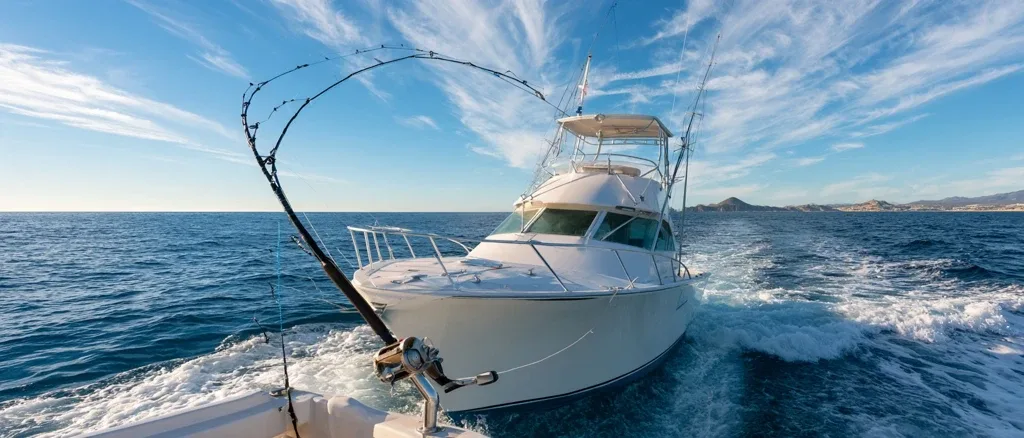
Tenerife is a serious destination for big-game sport fishing, because the seabed drops to great depths close to the coast. Most charters leave from Puerto Colón in Costa Adeje, with others from Los Cristianos and Los Gigantes. The star catch is blue marlin, mainly in summer and early autumn (roughly June to October), but tuna, wahoo, dorado (mahi-mahi) and barracuda mean there is fishing all year. Charters run as half-day or full-day trips, either shared or private, and marlin are usually tag-and-release.
Here’s what to expect, when to go and how to choose a trip.
| Harbour | Area | Notes |
|---|---|---|
| Puerto Colón | Costa Adeje | The main sport fishing hub, with the widest choice of boats |
| Los Cristianos harbour | Los Cristianos | Fishing and leisure boats alongside the ferry port |
| Los Gigantes marina | Los Gigantes | Smaller marina on the west coast, beneath the cliffs |
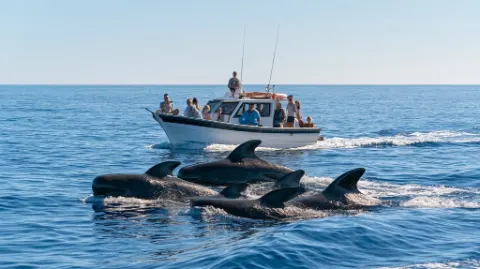
The waters between Tenerife and La Gomera are deep and rich in marine life, which is why the south-west coast is also famous for whale and dolphin watching. You may well spot pilot whales or dolphins on a fishing trip.
| Species | Best season (approximate) | Notes |
|---|---|---|
| Blue marlin | June to October | The headline big-game fish; usually tag-and-release |
| White marlin | Summer months | Smaller than blue marlin |
| Bluefin tuna | Spring | Large, powerful fish |
| Yellowfin tuna | Spring and summer | Popular target, good eating |
| Skipjack tuna | Spring to autumn | Common and lively |
| Wahoo | Autumn into winter | Very fast, hard-fighting |
| Dorado (mahi-mahi) | Summer and autumn | Colourful and acrobatic |
| Barracuda | Year-round | Often closer to shore |
Seasons vary from year to year with water temperature and currents, so ask the skipper what has been biting recently.
Prices depend on the boat, the length of trip and whether it is shared or private. Shared half-day trips are the most affordable option, while private full-day big-game charters cost considerably more. Compare a few operators and check exactly what is included before booking.
Spectators who don’t fish can often join at a reduced rate.
Marlin fishing in Tenerife is largely catch and release, often with tagging that contributes to research. You get the fight and the photo, and the fish goes back. Policies on keeping other species vary between boats: some let you take part of the catch, some keep it themselves. Ask before you go if this matters to you.
If you want to taste the local catch without hooking it yourself, see our guide to fish and seafood restaurants in Tenerife.
You’ll see locals fishing from harbour walls and rocky points all around the island. To fish from the shore yourself, you need a recreational fishing licence (licencia de pesca recreativa) issued by the Canary Islands government. There are rules on protected areas, sizes and catch limits, and fishing is restricted in marine reserves. Check the current requirements on the Canary Islands government website before you cast a line. On organised charters, the boat usually covers licences for you.
Take great care on rocks: waves on Tenerife’s coast can be powerful and unpredictable, especially on the north coast.
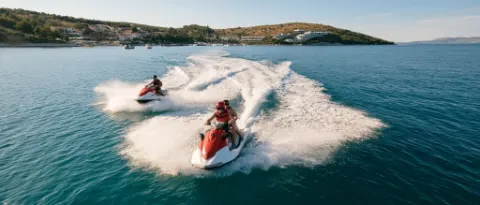
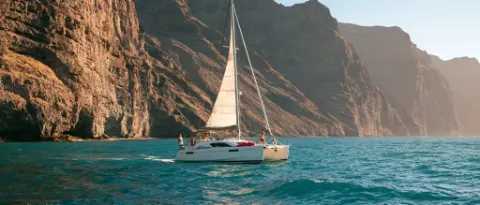
If fishing isn’t for everyone in your group, consider a boat trip or try jet skis and water sports. Puerto Colón is a short walk from the beaches of Costa Adeje; see things to do in Costa Adeje for ideas, and check what’s on this week for evening plans after a day at sea.
Information checked on 10 November 2026. This is general information only, not legal advice. Fishing seasons, licence rules and charter prices change, so check current details with the operator and the Canary Islands government.
13:00  14:00
 14:00
 14:00
 14:00
 14:30
 15:00
 15:00
 16:00
 16:30
 17:00
 17:00
Most sport fishing charters leave from Puerto Colón in Costa Adeje, with others from Los Cristianos harbour and Los Gigantes marina on the west coast. Deep water lies close to shore, so you reach fishing grounds quickly.
Blue marlin are mainly caught in summer and early autumn, roughly June to October. Tuna, wahoo, dorado and barracuda can be targeted at other times, so there is fishing all year.
For shore fishing you need a recreational fishing licence (licencia de pesca recreativa) from the Canary Islands government. On organised charters the boat usually covers licences, but confirm when you book.
It depends on the species and the skipper. Marlin are usually tag-and-release. Some boats let you keep part of the catch of tuna or other species, while others keep it themselves. Ask before you go.
Yes. Crews provide the tackle and bait, explain what to do and help you land fish. If you are prone to seasickness, take tablets beforehand and choose a calmer morning.