Is Mount Teide Active? Tenerife's Volcano, Earthquakes and Safety in 2026
Updated 6 November 2026 · DoTenerife
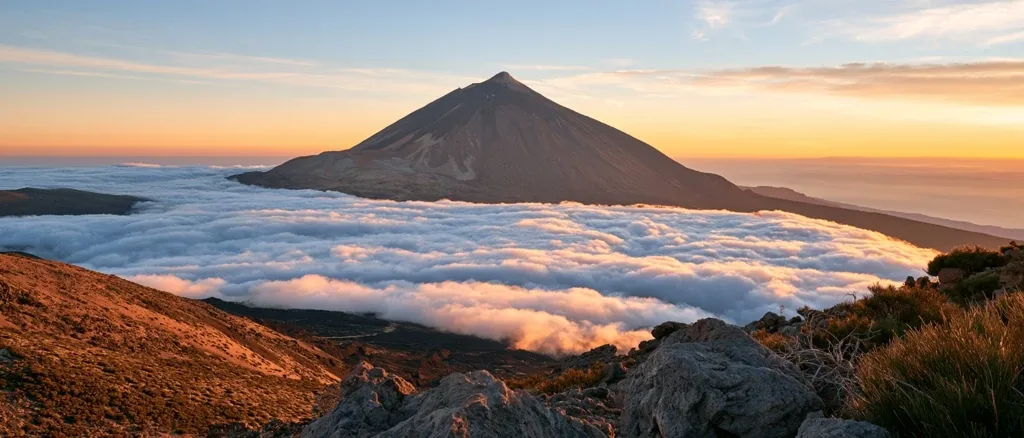
Short answer: no eruption is expected. Teide is an active volcano, and scientists monitor it closely. Tiny earthquakes have been recorded under the centre of the island in 2026. But the official assessment in August 2026 was that there were no signs of an eruption in the coming weeks or months, and the public alert level stayed unchanged. The most recent level announced, in July 2026, was green.
This page explains what is happening under Tenerife in plain English. It covers what the alerts on your phone mean, and why it is still safe to visit Teide.
The volcanic alert level (“semáforo volcánico”)
The Canary Islands use a four-colour volcanic traffic light to tell the public what to do:
| Level | What it means for the public |
|---|---|
| Green | Normal. No action needed |
| Yellow | Increased activity. Stay informed and follow official advice |
| Orange | Eruption possible. Get ready to evacuate if told to |
| Red | Eruption imminent or under way. Follow evacuation orders |
In July 2026 the Canary Islands Government confirmed that Tenerife’s level was green. In August 2026 the volcanic emergency committee, PEVOLCA, met again. It said there was no reason to change the level, which it reviews about every three months. Always check the latest level with the Gobierno de Canarias or 112 Canarias rather than social media.
“I got an orange volcano alert on my phone”
On Thursday 22 October 2026, Tenerife held VOLCANEX 2026, the largest volcanic emergency drill ever held in Spain. It was organised by the Cabildo de Tenerife with the 112 emergency service. About 1,500 people and around 70 organisations took part.
As part of the drill, the ES-Alert mobile warning system sent test messages:
- About 09:17: a message to the whole island simulating an orange traffic light. It said clearly that there was no eruption and no evacuation.
- About 11:00: a message to Guía de Isora and Santiago del Teide, simulating a preventive evacuation of the villages of Chirche and Aripe.
- 14:00: a message saying the exercise was over.
These messages were exercises only. The real alert level was not changed. Phones on Gran Canaria, La Palma, La Gomera and El Hierro could also have picked them up.
The 2026 earthquake swarms explained
The Instituto Geográfico Nacional (IGN) runs a dense network of seismometers on Tenerife. In 2026 it recorded several swarms of very small earthquakes under the centre of the island:
- February 2026: a series of swarms of “hybrid” events south-west of Pico Viejo, about 6.5–8 km below sea level. Around 950 tiny events were counted on 18–19 February alone.
- 13–16 March 2026: 59 small earthquakes, all below magnitude 1.8, at depths of 8–21 km.
- 3–4 July 2026: about 500 micro-earthquakes in ten hours west of Las Cañadas, at an average depth of around 10 km. None were felt.
Scientists link this activity mainly to fluids and gases moving through the volcano’s hydrothermal system. They do not see a rising body of magma. Ground deformation has been very small, about 2 cm over three years, and gas readings were falling in mid-2026.
The IGN has warned that small earthquakes may occasionally be felt around Las Cañadas. These would be low intensity, with no potential to cause damage. In the experts’ words, what would change their assessment is a pattern of shallower, stronger earthquakes together with rapid ground deformation. They said in August 2026 that nothing of the kind was being seen.
When did Tenerife last erupt?
Tenerife’s eruptions in historical times have been small, and they happened on its flanks and ridges, not from Teide’s summit crater.
| Eruption | Year | Where |
|---|---|---|
| Chinyero | 18–27 November 1909 | North-west ridge, near Santiago del Teide |
| Chahorra (Narices del Teide) | 1798 | South-west flank of Pico Viejo |
| Garachico (Trevejo) | 5 May – 13 June 1706 | North-west. Lava destroyed much of Garachico’s harbour |
| Fasnia, Siete Fuentes and Arafo | Dec 1704 – Mar 1705 | Dorsal ridge above the east coast |
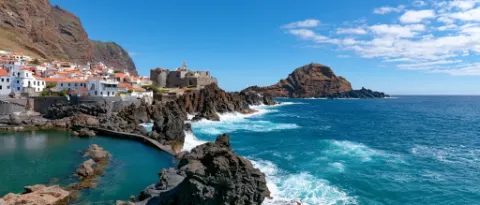
The 1706 eruption is why the old port of Garachico has its famous lava rock pools today. A period of seismic unrest in 2004–05 ended without an eruption.
Is it safe to visit Teide?
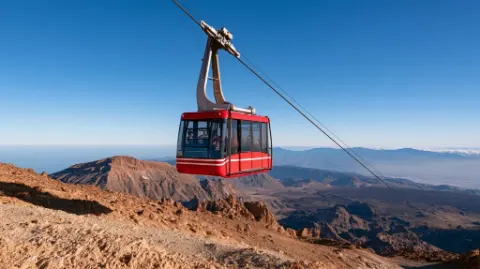
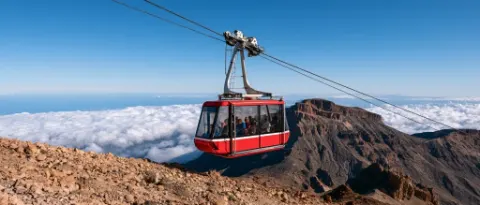
Yes. As of the latest official updates, no restrictions have been placed on visiting Tenerife or Teide National Park because of volcanic activity. The Teide cable car, the summit trails (with a permit) and the stargazing tours all operate as normal, subject to weather.
Practical safety at Teide is mostly about altitude and weather. The cable car’s top station is at 3,555 m. Strong wind, ice and cold close the cable car and roads several times each winter. See our Mount Teide guide.
If the situation changes
- Official alerts come through ES-Alert on your mobile, 112 Canarias and the Gobierno de Canarias.
- In an emergency, call 112, which has English-speaking operators. See Tenerife emergency numbers.
- Follow instructions from the authorities and your hotel or tour operator, not rumours on social media.
Where to check the latest information
- IGN (Instituto Geográfico Nacional): live earthquake catalogue for the Canary Islands.
- INVOLCAN (Instituto Volcanológico de Canarias): volcano monitoring and research updates.
- Gobierno de Canarias / PEVOLCA: the official volcanic traffic light level.
- 112 Canarias: emergency alerts.
Information checked on 6 November 2026. Sources: Gobierno de Canarias and PEVOLCA statements reported by Diario de Avisos, Moncloa.com and Canarian Weekly (July–October 2026), IGN data, and the Smithsonian Institution Global Volcanism Program. This page is general information, not an official warning. Always follow the authorities’ advice.
Frequently asked questions
Is Mount Teide an active volcano?
Yes. Teide and the volcanic system around it are considered active. The last eruption on Tenerife was Chinyero in November 1909, on the north-west ridge, and it was small. Teide's summit itself has not erupted in recorded history in the way people often imagine.
Is Teide going to erupt soon?
There is no sign of an imminent eruption. In August 2026 the Canary Islands volcanic emergency committee (PEVOLCA) and the IGN said there were no signs of an eruption in the coming weeks or months, and the alert level was not raised.
What is the volcanic alert level in Tenerife?
Tenerife uses a four-colour volcanic traffic light for the public: green, yellow, orange and red. In July 2026 the Canary Islands Government confirmed it was green, and the review in August 2026 left it unchanged. Check the Gobierno de Canarias or 112 Canarias for the latest level.
Why did I get an orange volcano alert on my phone in Tenerife?
On 22 October 2026 Tenerife held VOLCANEX 2026, Spain's largest volcanic eruption drill, and tested the ES-Alert mobile warning system. The 'orange' message was a drill only and said there was no eruption and no evacuation.
Is it safe to visit Tenerife and Teide National Park?
Yes. No restrictions on tourism or on visiting Teide National Park have been announced because of volcanic activity. Small earthquakes are recorded under the island regularly, almost all too weak to feel.
Have there been earthquakes in Tenerife in 2026?
Yes. The IGN recorded several swarms of tiny earthquakes under central Tenerife in 2026, including around 500 micro-quakes in ten hours on 3–4 July. None of them were felt, and scientists linked them to fluid movement in the hydrothermal system rather than rising magma.
Related guides